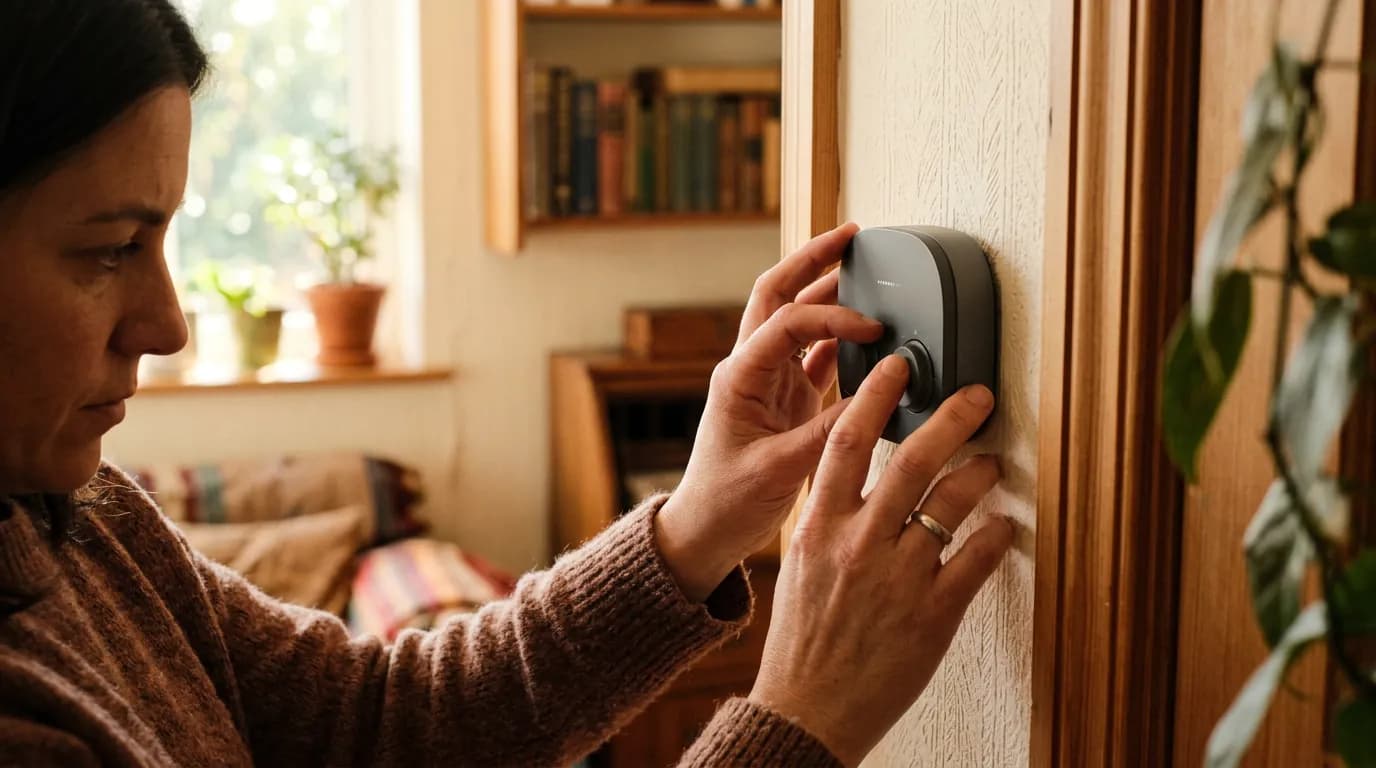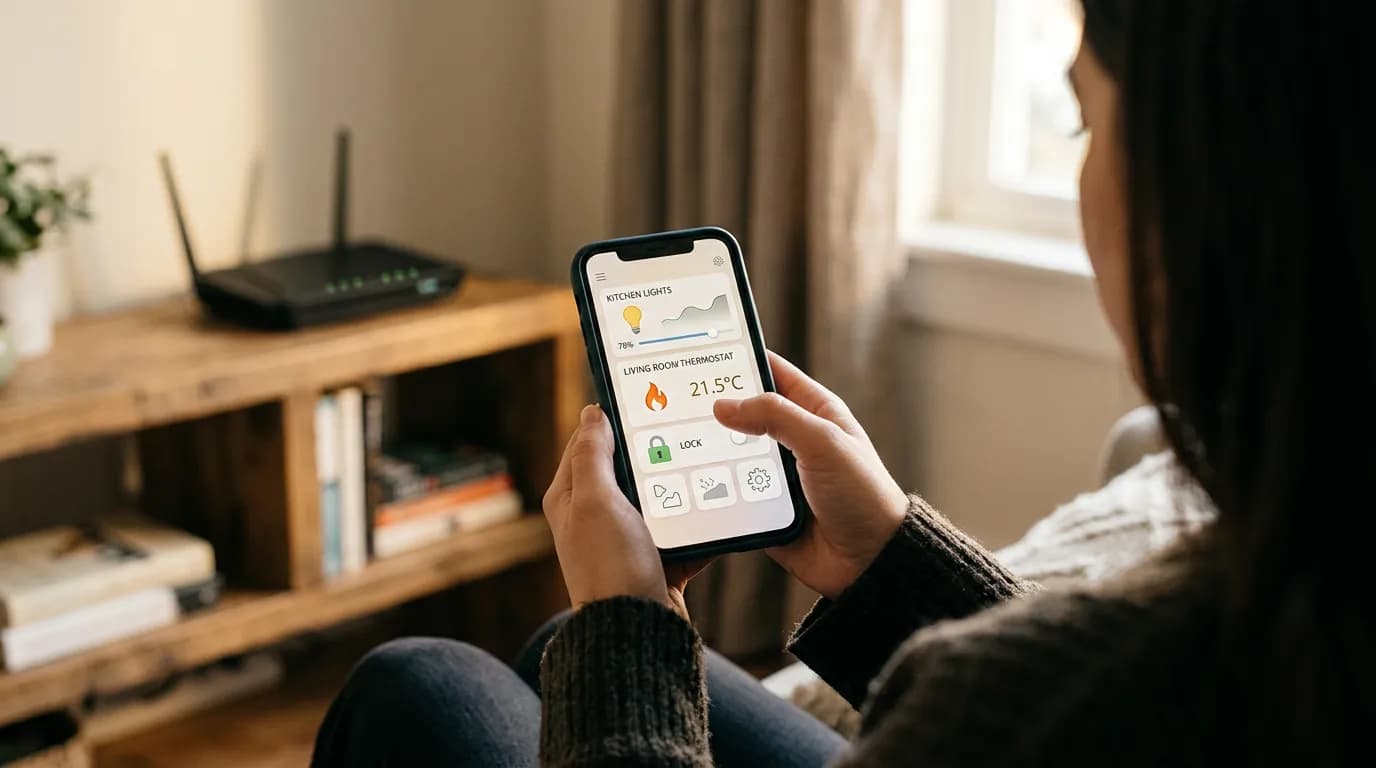
Energy auditors will flag your thermostat before they touch your insulation, and there's a reason for that. The thermostat is the one control point that touches every hour your HVAC system runs, which means small behavioral changes compound fast. Smart thermostat energy savings get marketed as a near-universal guarantee, but the actual number on your bill depends on three variables that most product pages skip entirely: your current thermostat behavior, your climate zone, and how well your HVAC equipment is matched to the device.
The Department of Energy estimates that setback scheduling alone can cut heating and cooling costs by around 10% annually, but that baseline assumes you're not already running a well-programmed schedule. If you've had a programmable thermostat sitting on a fixed 70°F setting for five years, the savings potential is real. If you've been manually adjusting temperatures twice a day with reasonable discipline, the gap narrows considerably.
Here's the tension nobody in the marketing materials acknowledges: smart thermostats do their best work when they replace genuinely bad thermostat behavior. The more disciplined your current setup, the smaller your savings ceiling.
How the Savings Mechanism Actually Works
A smart thermostat doesn't save energy by being smarter than you in any mystical sense. It saves energy through consistent setback execution, which means reliably dropping the temperature during hours you're asleep or away and raising it just before you return. The mechanism is straightforward thermodynamics: the greater the difference between indoor and outdoor temperature, the faster your home loses or gains heat. Keeping your home at 78°F when it's 95°F outside costs more per hour than keeping it at 82°F. Every degree of setback during unoccupied hours compresses that differential.
Or rather: the savings come specifically from hours you don't notice. Most households leave temperatures static overnight or while at work because adjusting manually feels like a chore. A smart thermostat removes that friction entirely. The Nest Learning Thermostat's published data suggests users save an average of 10-12% on heating bills and around 15% on cooling bills, though Nest is a Honeywell competitor with obvious incentive to report favorable numbers. The EPA's ENERGY STAR program independently estimates 8% savings on heating and cooling costs as a reasonable benchmark for households upgrading from a non-programmed manual thermostat.
The savings ceiling matters too. If your annual heating and cooling spend is $800, a 10% improvement is $80. That's not nothing, but it means a $250 thermostat has a three-year payback before you factor in installation. That puts it around the same payback as a mid-range programmable thermostat at $40, which does the scheduling job without the WiFi premium.
Smart vs. Programmable: The Real Comparison
The programmable thermostat comparison is where most buying guides go soft. The honest version: a $40 programmable thermostat with a schedule you'll actually maintain does nearly the same energy work as a $250 smart thermostat. The premium buys you geofencing, remote access, learning algorithms, and integration with other smart home devices. Those features matter for some households and are genuinely a waste of money for others.
| Feature | Programmable Thermostat | Smart Thermostat |
|---|---|---|
| Setback scheduling | Yes | Yes |
| Remote adjustment (app) | No | Yes |
| Geofencing (auto away) | No | Yes (most models) |
| Learning algorithms | No | Yes (Nest, some Ecobee) |
| Utility demand-response programs | Rarely | Yes (Ecobee, Nest) |
| Typical upfront cost | $25-$60 | $130-$280 |
| Setup complexity (older HVAC) | Low | Moderate to High |
The table above illustrates why the smart vs. programmable decision hinges on your actual behavior. Geofencing is the one feature that genuinely adds savings beyond what a programmable thermostat can deliver, because it handles the unpredictable days when your schedule breaks. If you travel inconsistently or work irregular hours, geofencing earns its premium. If you have a fixed 9-to-5 and rarely deviate, program a $40 Honeywell RTH7560E and call it done.
Utility demand-response programs deserve a separate mention. Several major utilities, including those in California, Texas, and the mid-Atlantic states, offer bill credits when you enroll a compatible smart thermostat (Ecobee and Nest are most commonly accepted) and allow the utility to make small temperature adjustments during peak demand events. These credits typically run $20-$100 per season depending on the program. Check your utility's website directly. This is a genuinely underused savings path that programmable thermostats can't access.
When Smart Thermostats Don't Deliver
The downside case here is specific, and it applies to a meaningful share of U.S. households. Smart thermostats work poorly, or not at all, in homes with older HVAC systems that lack a common wire (C-wire) on the thermostat wiring. Without a C-wire, many smart thermostats either require an add-a-wire adapter kit or simply won't function reliably. Nest has addressed this partially with power-stealing technology, but that workaround can cause problems with some variable-speed furnaces and heat pump systems.
If you have a heat pump with auxiliary heat strips, verify compatibility before purchasing. Ecobee's product compatibility checker and Nest's pre-purchase tool both ask about your existing wiring, and both are worth running before you spend anything. An incompatible installation that requires an HVAC technician's visit can add $100-$200 to your effective cost, erasing the first year of savings entirely.
Beyond wiring: homes in mild climates with minimal heating and cooling loads see smaller absolute savings. A household in San Diego with a $300 annual HVAC bill will save less in dollar terms than a household in Minneapolis with a $1,200 bill, even if the percentage savings are identical. The math doesn't lie. Buyers who skip the thermostat upgrade entirely keep their $250 in pocket and lose roughly $80-$120 per year in potential savings. Over five years, that's a real cost of inaction, but it's not catastrophic. The decision is closer than the marketing implies.
Payback Period and Choosing the Right Device
I'd start with your utility's rebate page before looking at Amazon. Many utilities offer $25-$75 instant rebates on ENERGY STAR certified smart thermostats, which changes the payback math significantly. A $250 Ecobee SmartThermostat Premium with a $50 utility rebate and $80 in annual savings pays back in roughly 25 months. Without the rebate, it's 37 months. The ENERGY STAR certified thermostat list is maintained by the EPA and is searchable by model number at energystar.gov.
For most households upgrading from a non-programmed manual thermostat, the decision process should check four things: C-wire availability, utility rebate eligibility, HVAC system compatibility (heat pump vs. conventional), and whether your schedule is regular enough that geofencing adds meaningful value. Check sq footage requirements, system type, and Thread or WiFi protocol support first if you're building toward a broader smart home setup.
The best-reviewed options in independent consumer testing (Consumer Reports and Wirecutter both run ongoing HVAC category evaluations) consistently cluster around the Ecobee SmartThermostat Premium and the Google Nest Thermostat. The Nest Learning Thermostat E sits in the middle on price and features and is worth considering for conventional forced-air systems without heat pumps. But the specific model matters less than the compatibility and rebate check. A perfectly compatible $130 device with a utility rebate will outperform a $280 device with a wiring problem.
That framing misses something. The real question isn't which smart thermostat saves the most energy in lab conditions. It's which setup you'll actually leave running on the programmed schedule a year after installation, because that's where the savings actually live.
Getting to Real Savings
If your home has a C-wire and you're currently running a manual or unprogrammed thermostat, install a smart thermostat. The energy savings are real, the payback is reasonable, and the utility rebate programs make the numbers work faster than the sticker price suggests.
If you have a programmable thermostat you've actually programmed and maintained, the incremental gain from upgrading to smart is narrower. Geofencing and demand-response enrollment are the two features that could justify the cost. Run your utility's demand-response program check first; if they offer meaningful bill credits for smart thermostat enrollment, that's the deciding factor.
If your HVAC system is older or you have a heat pump, do the compatibility check before spending anything. A botched installation costs more than the thermostat saves in year one.